Integrated Health and WaSH Response to Cholera Outbreak in Yilmana Densa woreda, Amhara region.
Donor: EHF (Ethiopian Humanitarian Fund)
Implementer: Health, Development, and Anti-Malaria Association
Infrastructure, Education, and the Power of 35 million Voices: A Look Inside Our Integrated Cholera Response.
In the face of a public health crisis like cholera, a quick fix is never sufficient. To truly safeguard a community, our approach goes beyond surface-level fixes, combining physical infrastructure with deep-rooted community empowerment. Our recent Integrated Cholera Response and Prevention initiative has done just that.
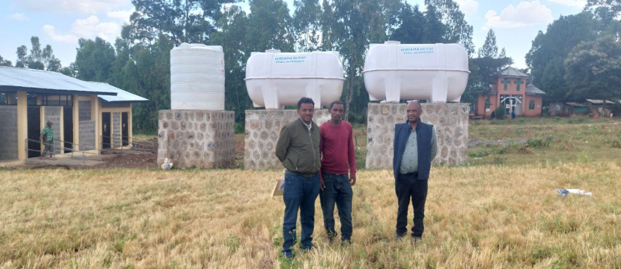
WASH Infrastructure: Water is the frontline in the fight against cholera. We didn’t just offer temporary solutions; we built for the future. By drilling two shallow wells, we have secured sustainable, safe water access for the community. However, clean water alone is not enough. To institutionalize hygiene, we constructed modern latrines and shower facilities. These structures are not just buildings; they are essential infrastructure designed to change daily habits and provide dignity to every user.
Capacity Building: Tools are ineffective without the knowledge to use them. We conducted specialized training sessions for healthcare professionals and community leaders, focusing on the latest methods in Cholera Management and Prevention. By empowering local leaders, we ensure that when challenges arise, the community has the expertise to respond swiftly and effectively.
Strategic Media Impact: Changing the behavior of an entire community requires meeting people where they are. Through strategic media partnerships, our life-saving health data reached over 35 million individuals. By utilizing radio, television, and digital platforms, we transformed essential health information into common knowledge, creating a nationwide shield of awareness.
Community Ownership: The true measure of a project’s success is not in how it starts, but in how it endures. We are proud to report that 3,764 community members not only witnessed this project but also took ownership of it. Through active participation and local commitment, these thousands of stakeholders have become the primary guardians of the new infrastructure. This level of community ownership is the key factor that ensures maintenance is local and sustainability is guaranteed.
The Bottom Line
We aren’t just fighting an outbreak; we are building a legacy. By combining infrastructure, education, mass communication, and local ownership, we have created a blueprint for what modern public health should entail. Together, we are making cholera a thing of the past.
The Health, Development and Anti-malaria Association /HDAMA/ was established on August 23,1998 by Volunteers who were deeply concerned about the increasing problem of malaria and its high morbidity and mortality in Ethiopia. HDAMA has been officially registered as an indigenous NGO



Leave A Comment